Skip to content

Integrations for your site, 1C, payments and Telegram in Tajikistan

We automate routine business work in Tajikistan: we link your site, accounting, 1C, messengers and spreadsheets so data moves on its own. We check that a connection is possible before estimating.
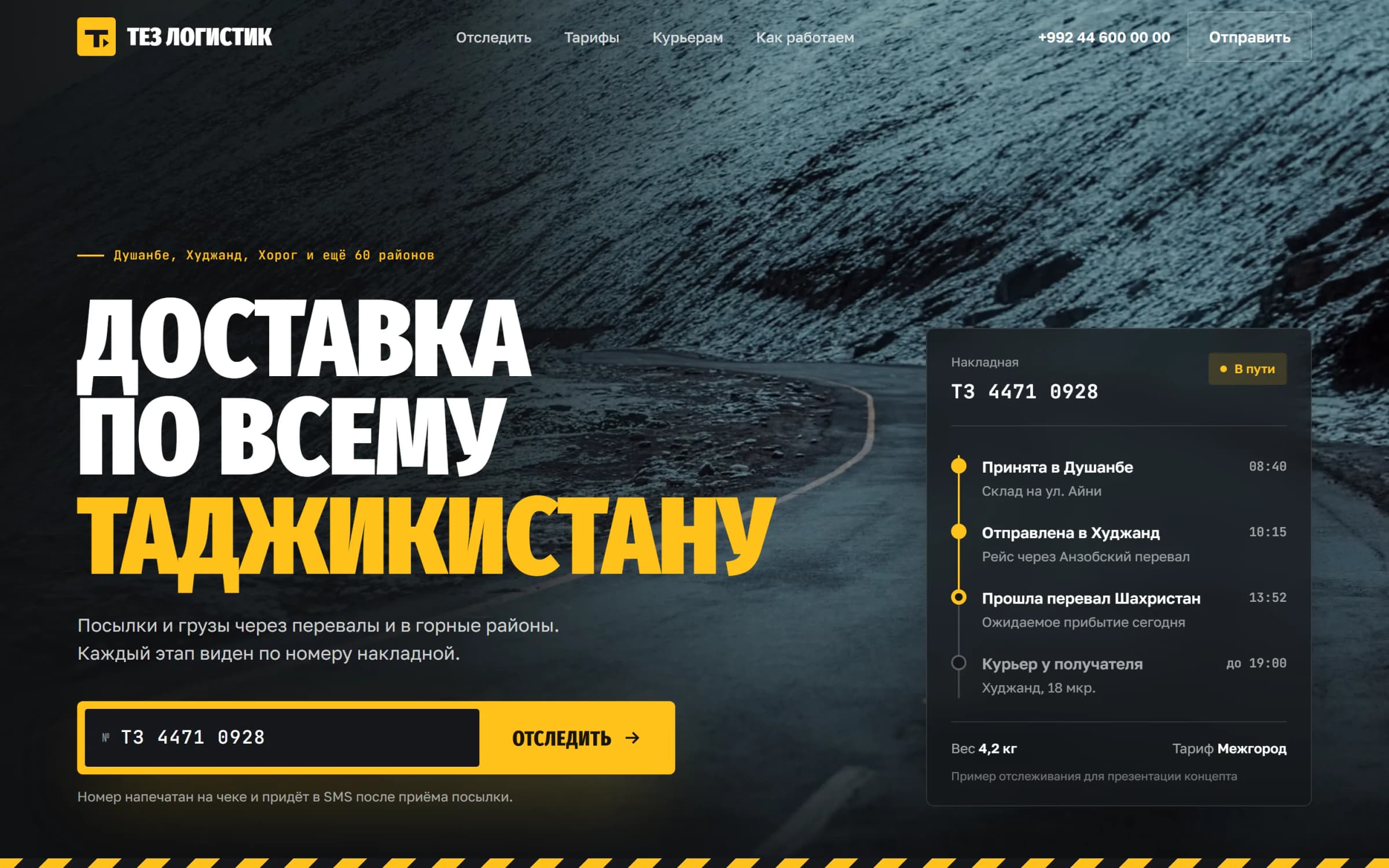
Tez Logistics, logistics: desktop screen, studio concept
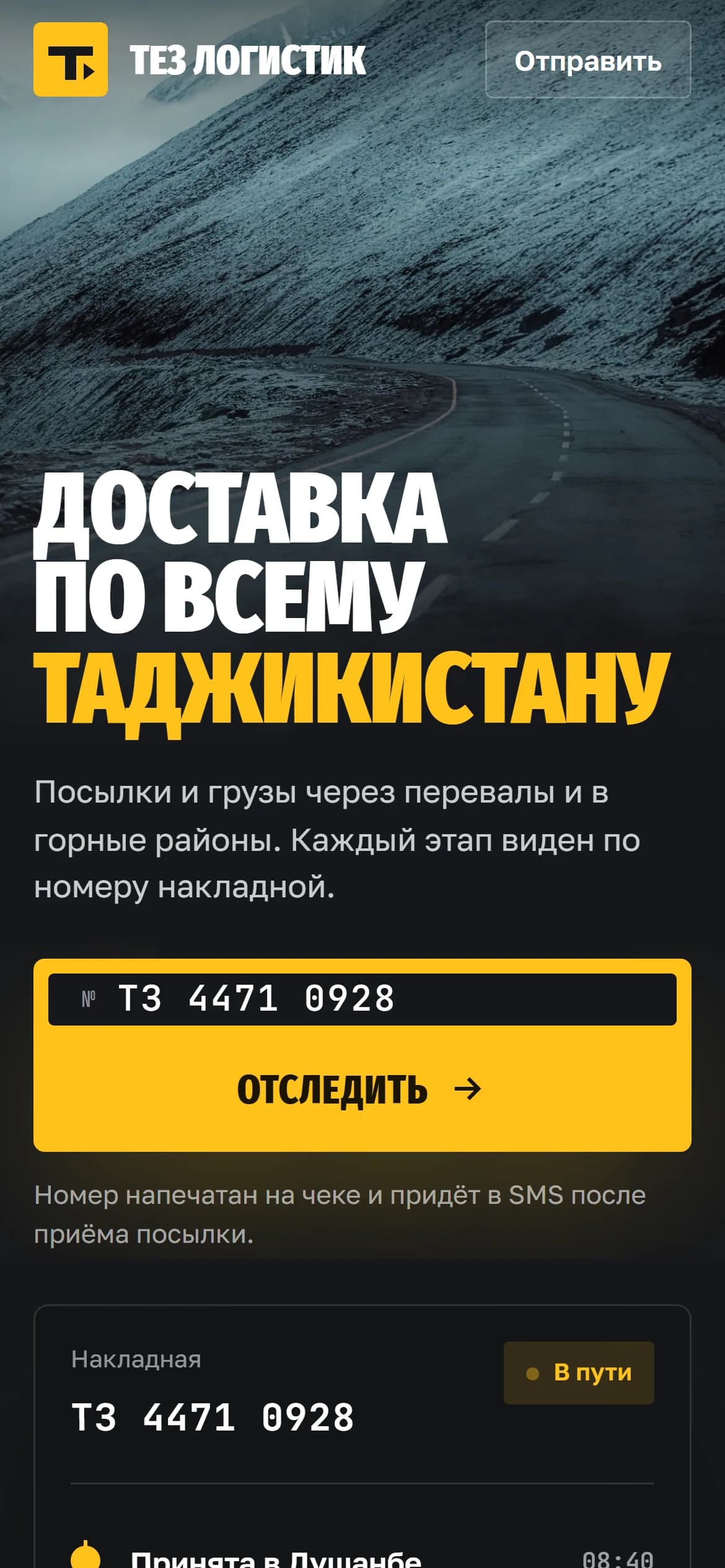
Tez Logistics, logistics: mobile screen, studio concept

When people come to us

  • Data is copied by hand between systems

    An enquiry arrives on the site, is retyped into the CRM, then into a spreadsheet, then into the warehouse chat. Each step can introduce a mistake.

  • The site catalogue and stock levels disagree

    Prices and availability change in your records, while the site and channels keep the old ones. Customers order what you do not have.

  • You need to take payments or calculate delivery

    Customers ask how to pay online. You are not sure which services are open to your business or how to connect them.

  • Social media messages stay in personal accounts

    Messages and comments are read by different people and enquiries never reach the CRM. Finished materials are posted by hand at random times.

  • Reports are assembled from five sources

    To see the whole picture you export data from the site, CRM, ads and spreadsheets and stitch it together by hand.

What is included

  • Links between systems

    • Site, forms and CRM: an enquiry lands on the card by itself
    • CRM and messengers: notifications to staff and customers
    • Spreadsheets and catalogue: loading and updating products, prices and stock
    • Accounting and warehouse systems: exchange on a schedule or on an event
    • Analytics: site and CRM events gathered into one report
  • Payments, delivery and external services

    • Online payment, where the provider offers an API for your type of business
    • Delivery calculation and booking through services with an available API
    • Webhooks: a system reports an event immediately instead of waiting to be asked
    • A fallback route for when an external service is unavailable
  • Technical automation of social channels

    • A calendar and scheduled publishing of finished materials you have approved
    • Syncing the catalogue and site with channels and pages
    • Collecting messages and comments in one place and passing them to the CRM
    • Staff notifications and reporting on enquiries
    • Work through the platforms' official APIs and tools

How we check that a connection is possible

  • API documentation

    Whether it is open, and which actions and data it offers.

  • Test access

    Before work starts we ask for a sandbox or a test key.

  • Limits and cost

    How many requests per minute are allowed and whether you pay for them.

  • If there is no API

    We offer a file export or another route, and if there is none, we say so plainly.

We write the result of the check into the estimate: what we connect, what we do not and why.

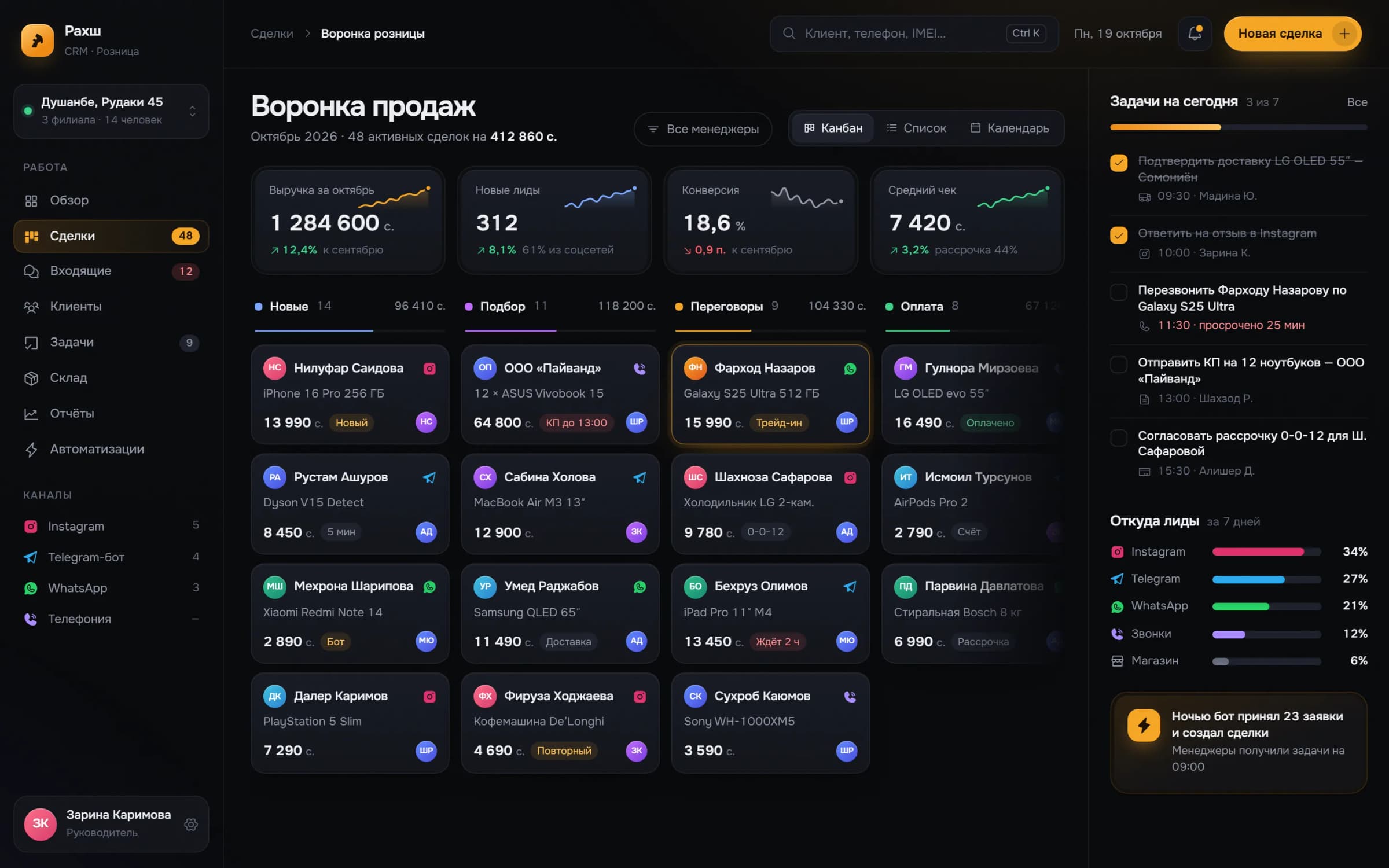
What it can look like

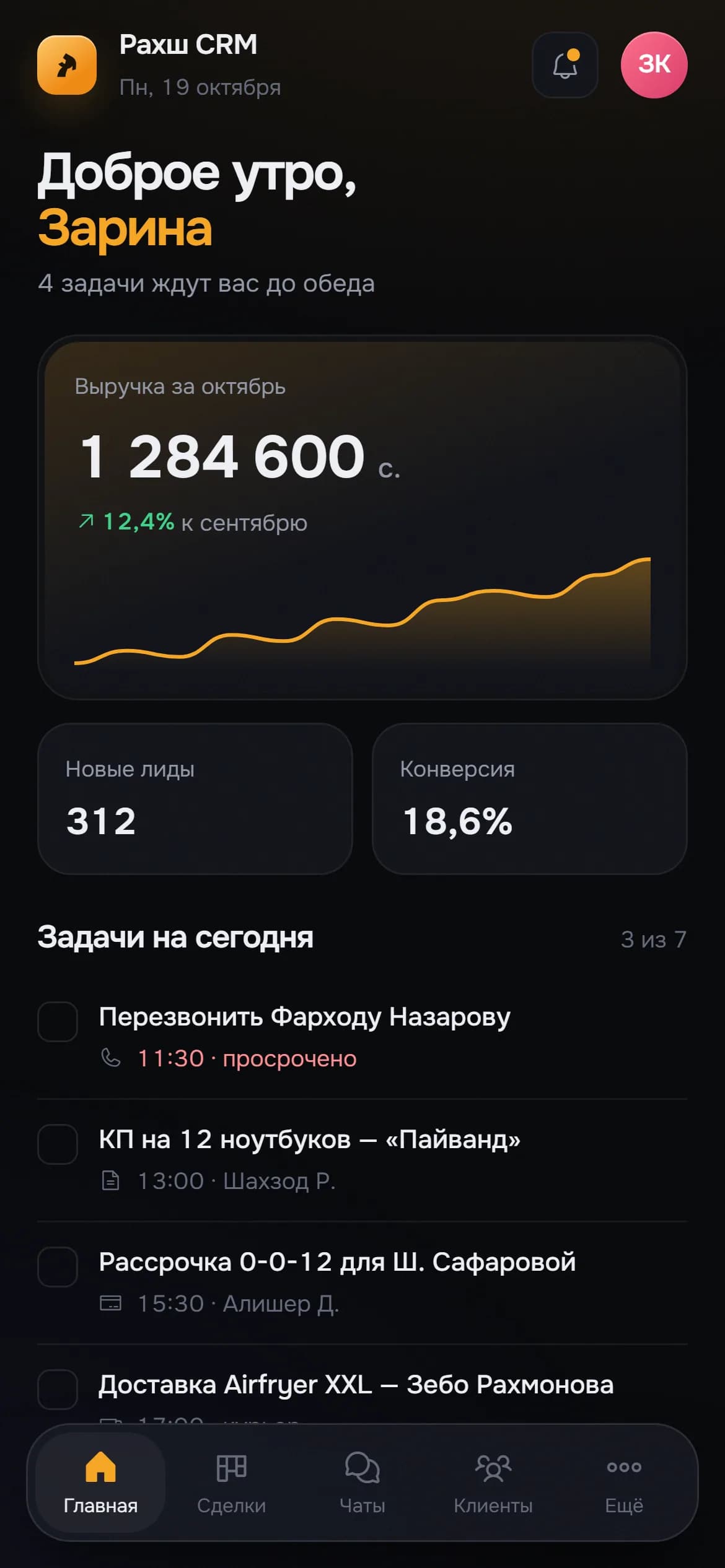
Studio concept projects on this topic: fictional companies, real design and interface work.

How the work goes

Timing

We name the timing after reviewing the task and fix it stage by stage in the contract.

Access and API documentation set the timing: work cannot begin until a service gives test access. Two-way exchange with conflict handling takes longer than a one-way transfer.

  1. We draw a data map

    We establish which systems you have, what data moves between them and where everything is still done by hand.

  2. We check that connections are available

    Before estimating, we find out whether your bank, payment service or delivery service offers an open API and on what terms. Without that we do not promise a connection.

  3. We design the exchange and error handling

    We decide what is sent and when, what happens on a failure and how to avoid duplicates. This matters more than the transfer itself.

  4. We build and test on sample data

    We connect the systems in test mode, run typical and awkward cases through, and compare the results.

  5. We launch with a log and alerts

    Every transfer is written to a log and failures arrive as a message. If an external service changes its terms, you hear about it straight away.

Cost: what is included and what is not

We give an exact estimate after a conversation, free of charge.

What you get after the first conversation

  • A map of your systems and a list of places where data is moved by hand
  • A list of connections whose availability we will check before estimating
  • A proposed set of connections and their stages
  • What you should send us: access, service documentation, sample data
  • An estimate once API availability is checked and exchange directions are clear

Included in the price

  • A data exchange diagram between the systems
  • Transfers set up on a schedule or on an event
  • A transfer log and failure alerts
  • Testing on sample data
  • A description of what goes where

Not included: separate or on your side

  • API rates at the services we connect
  • A 1C specialist's work on the database itself, if needed
  • Paid cloud middleman services, if you choose them
  • Bank and payment service fees
  • Hosting for the exchange, if it does not run on your server

What the price depends on

  • Number of systems to connect and the direction of exchange
  • Whether the systems have an open API and how well it is documented
  • Availability and terms of payment and delivery services
  • Data volume and exchange frequency
  • Whether two-way sync and conflict resolution are needed
  • Social and messenger platform rules for your account
  • Requirements for logging, monitoring and fallback scenarios

Contract, ownership and after launch

  • Contract and ownership

    Everything created under the contract is registered to you.

    • Access keys and tokens are issued on your account
    • The exchange code and data transfer diagram are handed over to you
    • The server where the exchange runs is registered to you
    • The transfer log is open to you, not only to us

    You accept the work stage by stage: the next stage starts once you have signed off the previous one.

  • After launch

    • When a service changes its API terms, we warn you and price the rework
    • The procedure and timing for fixing failures are written into the contract
    • New links between systems are estimated before work starts
  • What we do not promise

    • Connecting a service that has no API
    • An external service that never fails: its availability is not in our hands
    • That a bank, payment or delivery service will be on the list of connections: the provider decides
    • Running social media accounts or producing content

Questions and answers

Which services can you connect?

Anything that offers an open API or webhooks: CRMs, messengers, spreadsheets, websites and many accounting systems. The exact list depends on your bank, delivery services and payment providers, so we check availability before estimating.

Can you connect online payments?

Maybe. It depends on whether your bank or payment provider has an API open to your kind of business. We name no provider up front and promise nothing until availability and terms are confirmed.

What are an API and a webhook in plain words?

An API is the way one program asks another for data or an action. A webhook works the other way round: a system reports an event itself, such as a new payment. Together they replace manual copying.

Do you run our social media?

No, we do not do SMM management or content production. We automate the technical side: publishing your finished, approved materials on a calendar, syncing the catalogue, collecting enquiries into the CRM and sending reports.

How do you work with social platforms?

Only through their official APIs and tools. We do not use workarounds, artificial boosting or anything that breaks a service's rules, because that puts your account at risk of being blocked.

What if an external service stops working?

We build in retries, a queue and a failure alert. Data is not lost but waits until the service returns, and you receive a message if a decision is needed from you.

Can the site be linked to 1C?

Yes, if your version of 1C has HTTP services or an export. We exchange products, prices, stock and orders. What exactly is available only becomes clear after we check your database.

Where should business automation start?

With the most frequent manual task: moving an enquiry, updating prices, building a report. We draw a data map, pick the one or two links that eat the most time and launch those first.

Tell us about your task

Describe the situation in your own words. We will tell you what can be done and where it is best to start.

How can we reach you